
In the Context of EUSEW 2026: An Inspiring Podcast: “Energ’ Ethic” by Marine Cornelis
The 2️⃣0️⃣th edition of EUSEW2026—my recap of 3️⃣ inspiring and motivating days in Brussels and online from the perspective of the 🌊⚓offshore wind industry—absolutely must be added here.
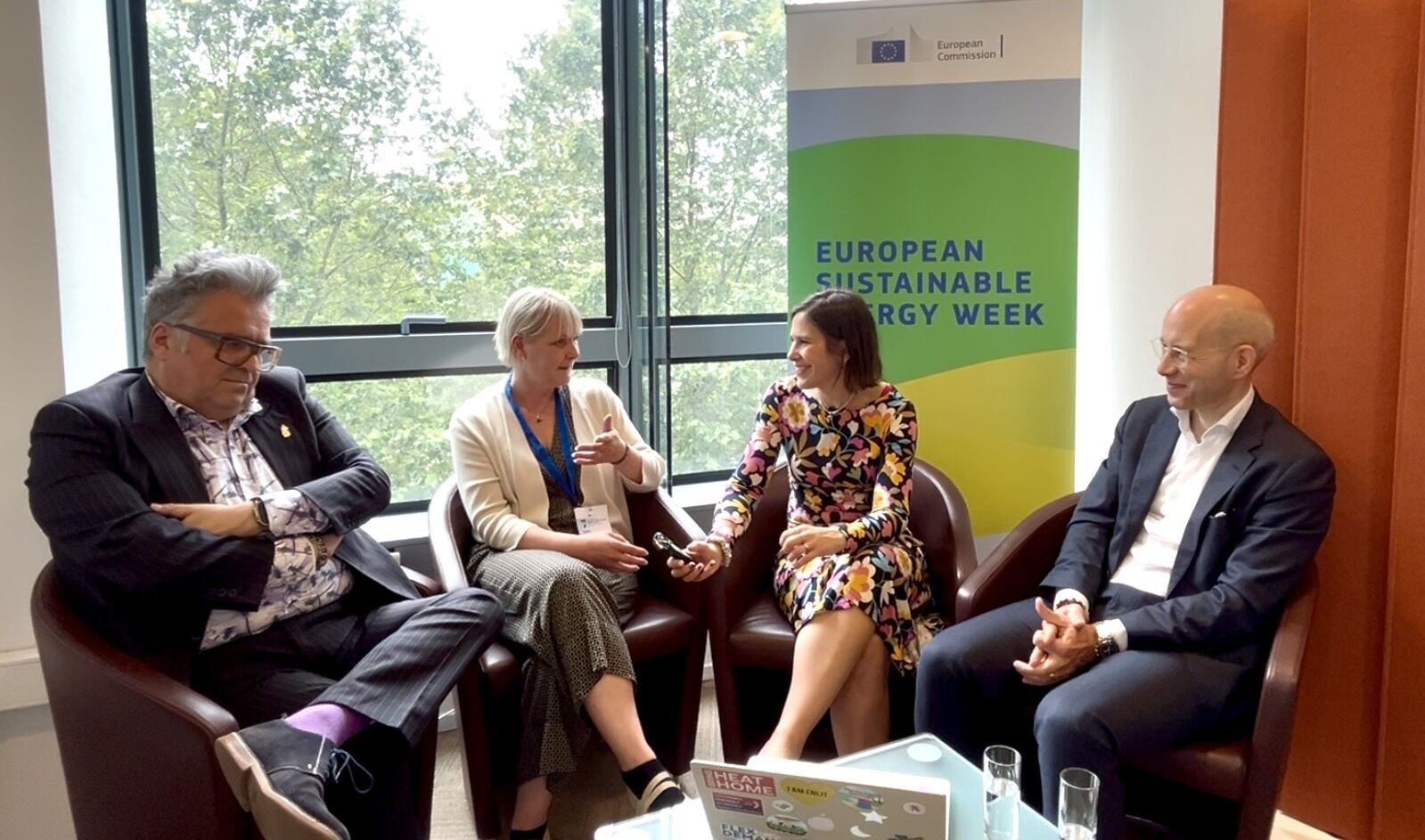
As a digital ambassador for European Sustainable Energy Week, I’m lucky not to be alone. And in addition to my blog post as an ambassador on the connection between European green steel and offshore wind energy🌊⚓—or the offshore wind industry—I had the opportunity to contribute to a podcast hosted by Marine Cornelis, a digital EUSEW ambassador, to a podcast reflecting on 20 years of EU energy policy and to explain, from my perspective, how the transformation—the energy transition—is creating concrete added value for Europeans and can continue to do so.
With Dušan Jakovljević and Thomas Nowak, both digital ambassadors, we brought together very different perspectives on the developments of the past two decades on Marine’s podcast. Twenty years of EUSEW have brought real progress in technology and market shaping, but the goal—added value for people—is still far from being clearly realized, let alone achieved.
These different perspectives highlighted the “Brussels energy bubble,” which can also be found in a different form in German energy policy. Dušan describes this situation in Brussels as “Hotel California,” and this image explains in many ways why developments in energy policy often do not proceed rationally or linearly, why “the wheels turn slowly,” and why energy and industrial policies seem increasingly complex and, in some cases, even get in each other’s way.
You can find our episode of Marine Cornelis’ “Energ’ Ethic” podcast here: https://www.youtube.com/watch?v=Vrh0bYkb3-0
The Green Deal, the Clean Industrial Deal, the Net Zero Industry Act, the Industrial Accelerator Act, AccelerateEU, CBAM, the electricity market reform, the EU’s Critical Raw Materials Act, the “Made in Europe”/Single Market debate, and many more—all share a common goal: decarbonization—including through electrification—to combat climate change, while also promoting reindustrialization, job and prosperity growth, and European resilience and sovereignty. Each goal, taken on its own, is already a giant step forward, given the EU’s high dependence on energy imports and its ongoing deindustrialization. The interplay of these different approaches comes together like a mosaic, and this is essential if the desired developments are to become a reality. So far, the varying national approaches have tended to slow down and complicate the European path, while at the same time calling for simplification. Simplification, however, requires that the content itself be simplifiable. In my assessment, this is hardly possible in this case and would initially mean that there could no longer be any national variations. This is where the greatest potential for simplification lies—the maximum leveraging of synergies and the fastest possible progress toward electrification and decarbonization, toward financial viability and maximum climate protection, as well as for the most rapid reindustrialization and, consequently, the greatest possible increase in Europe’s prosperity.
From my perspective, the focus now must be on working together across Europe and across national borders 🤝 to further break down remaining barriers and thus ensure a resilient, 🍃climate-friendly 🏭reindustrialization and jobs 💪 in Europe. Every detour costs time that we don’t have. What’s needed now is a unified European approach, which must be harmonized.
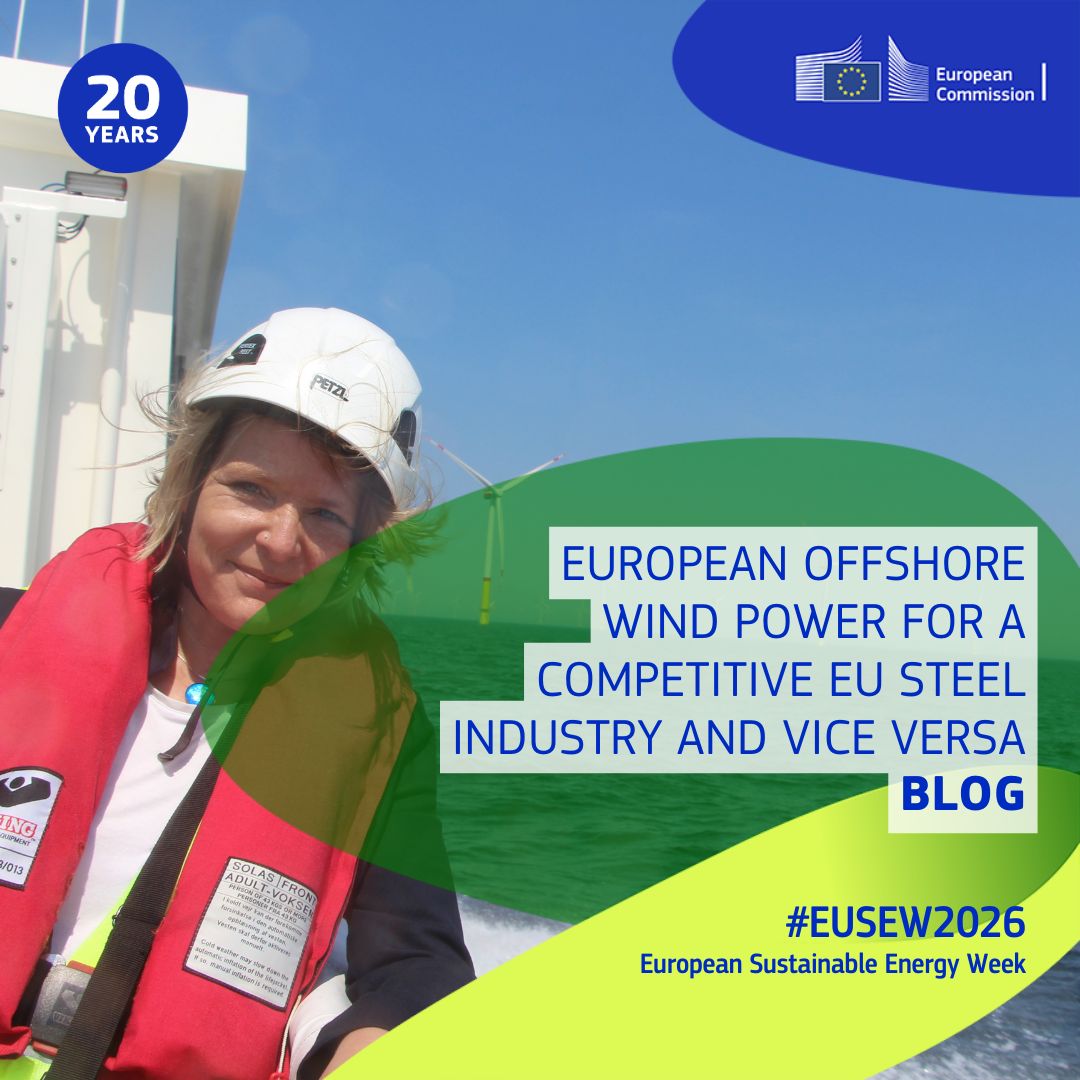
Here you’ll find my EUSEW 20th Anniversary blog post, which focuses on the relationship between energy-intensive industries and sustainable energy supply, using steel and offshore wind energy as examples: https://sustainable-energy-week.ec.europa.eu/news/european-offshore-wind-power-competitive-eu-steel-industry-and-vice-versa-2026-02-10_en
Of course, this is my personal assessment and is primarily shaped by my experience with “EU and German regulations on offshore wind energy and green hydrogen.” I would welcome inspiring comments and am always willing to reconsider my own position if the arguments presented are convincing to me.


