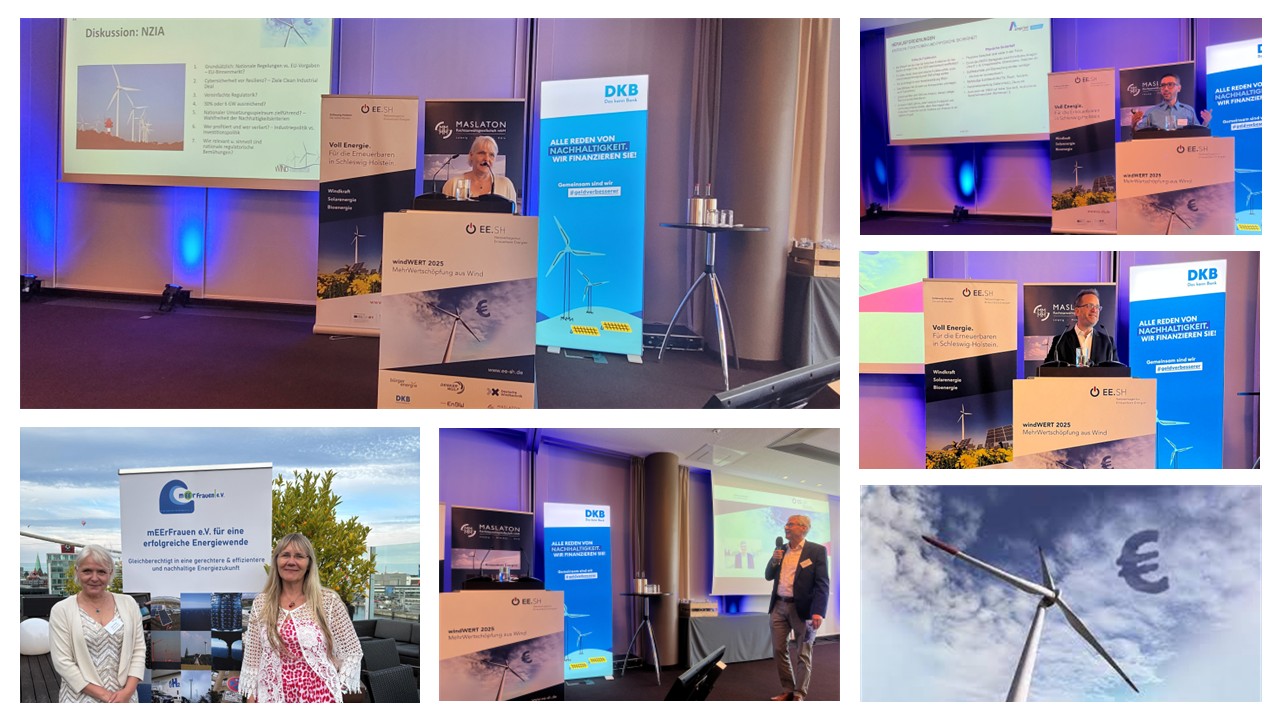
At the 15th windWERT in Kiel on August 26, 2025, the motto was: “More added value 💪 for the region”. The Net Zero Industry Act (NZIA) was my topic, which could easily provide a program for one or more days.
Thank you for the opportunity to present a topic that is important to me. The title for my impulse: “Net Zero Industry Act – More #competitiveness for the German wind industry?”
➡️ My task: Net Zero Industry Act (NZIA) in 15 minutes. 🤔😅
➡️ Answer to the question in the title of the presentation: Yes. ✅ – If instead of 3️⃣0️⃣% of the volume auctioned annually in each #EU country (or 6️⃣GW) 💯% is included, this is even much faster. 🏃♀️➡️
Without the NZIA’s qualitative #tendering criteria and the resulting #resilience, the Clean Industrial Deal (target: 4️⃣0️⃣% of annual demand for net 0️⃣ production capacity within the EU by 2030) is not feasible, or in other words, then wind will follow PV industry history and we will face a de-industrialization that we cannot imagine today.
The NZIA is a complex issue, but not one for tomorrow, it is decisive for the design of national #regulation today – active EU #industrial policy is essential for the competitiveness of the #wind industry at Land🌬️ & at sea🌊⚓.
With the NZIA, the Green Deal strengthens the competitiveness of the climate-neutral industry in Europe and accelerates the transition to climate neutrality. It does this by creating a more favorable environment for the expansion of EU production capacity for climate-neutral technologies and products needed to achieve Europe’s ambitious climate targets.
The race for sustainable technologies is in full swing. The world’s largest economies – from Germany to India, from China to Poland – have all started to invest heavily in green energy production.
In order to secure Europe’s position as a location for industrial innovation and sustainable technologies, the Green Deal’s industrial plan comprises 4 central pillars:
- Plannable and simplified regulatory framework conditions
- Faster access to funding (promotion/financing)
- Build competencies – improve skills
- Open trade for resilient supply chains
The first pillar of the plan deals with the regulatory environment. This means creating a simpler, faster and more predictable framework, securing the necessary quantities of raw materials and ensuring that users can benefit from the low cost of renewable energy. There are three initiatives to support this work:
- Net Zero Industry Act or the Net Zero Industry Act
- Critical Raw Materials Act aka Critical Raw Materials Act
- Reform of the electricity market
The Net-Zero Industry Act aims to improve European production capacities for Net-Zero technologies and their key components and to remove barriers to the expansion of production in Europe. The regulation aims to increase the competitiveness of the net-zero technology sector, attract investment and improve market access for sustainable technologies in the EU. This supports the energy transition and improves the EU’s security of energy supply and promotes energy independence.
Tender criteria (clarification of pre-qualification and award criteria in auctions for the use of energy from renewable sources; Implementing Regulation (EU) 2025/1176):
Mandatory pre-qualification criteria
– Responsible entrepreneurial action
– Cyber security (including the NIS2 Directive)
– Ability to deliver projects in full and on time
– Pre-qualification or award criteria to be included to assess the auction’s contribution to sustainability and resilience (Article 26, 2024/1735)
Contracting authorities must apply mandatory minimum environmental sustainability requirements and mandatory requirements to assess the contribution of the tender to resilience (Article 25, 2024/1735)
The choice of the type of criteria for the auction’s contribution to sustainability and resilience (pre-qualification or award criteria) is the responsibility of the authorities responsible for the auction. The competitive nature of the bidding process should not be undermined and the deployment of RE should not be unduly slowed down. The decisive factor is the degree of dependence of the Union on a third country. Over 50% dependence on a single third country or at least 40% (Implementing Regulation 2025/1178) allows participation in relevant auctions to be restricted or points to be awarded.For onshore & offshore wind and electrolysers, the resilience assessment is also required below at least 40% with reference to China (forecast production exceeds domestic targets and foreseeable demand).The contribution of the auction to sustainability can be assessed by including criteria relating to environmental sustainability, innovation or integration of the energy system. The Commission is granted implementing powers to define the minimum requirements.
The existing implementing acts + delegated acts are generally suitable for achieving the objectives of the NZIA. First resilience tenders in Germany are planned for 2026. Important: Harmonization of tendering criteria within Europe!
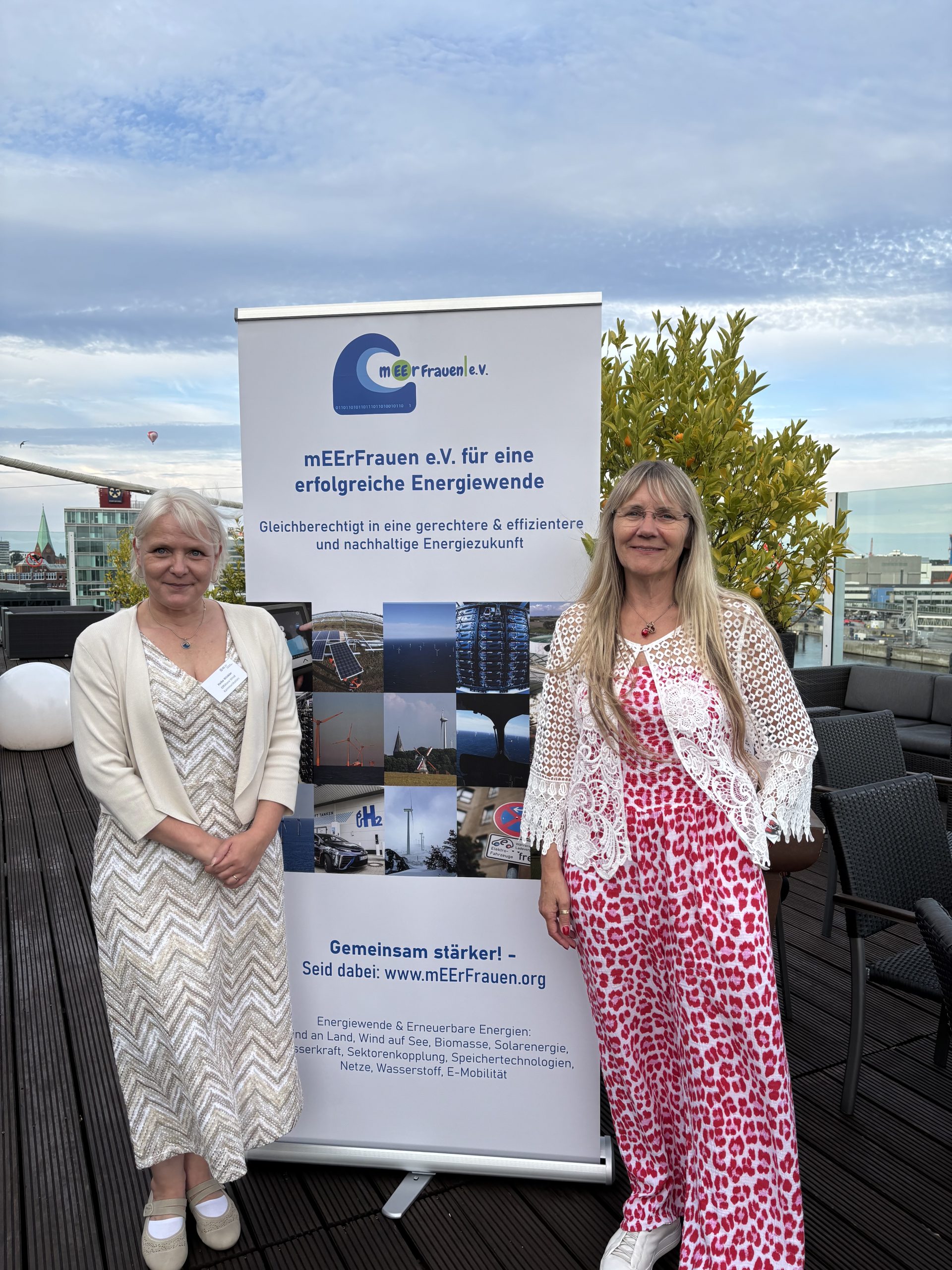
Many exciting presentations, from the introduction of GATEWAY49 – The Startup Accelerator in Schleswig-Holstein to the “Challenges posed by upcoming laws on critical infrastructures” by Mohamed Harrou from Amprion. In addition, we as mEErFRauen e.V. had the opportunity to introduce ourselves and I was thrilled by the good discussions with the participants of the Onshore Wind 🌬️ conference in Kiel. … It was a really successful event and a wonderful networking opportunity at the SH wind community meeting on deck 8 with a view over the Kiel Fjord.
Many thanks for the inspiring greeting from Klaus Müller, President of the Federal Network Agency!
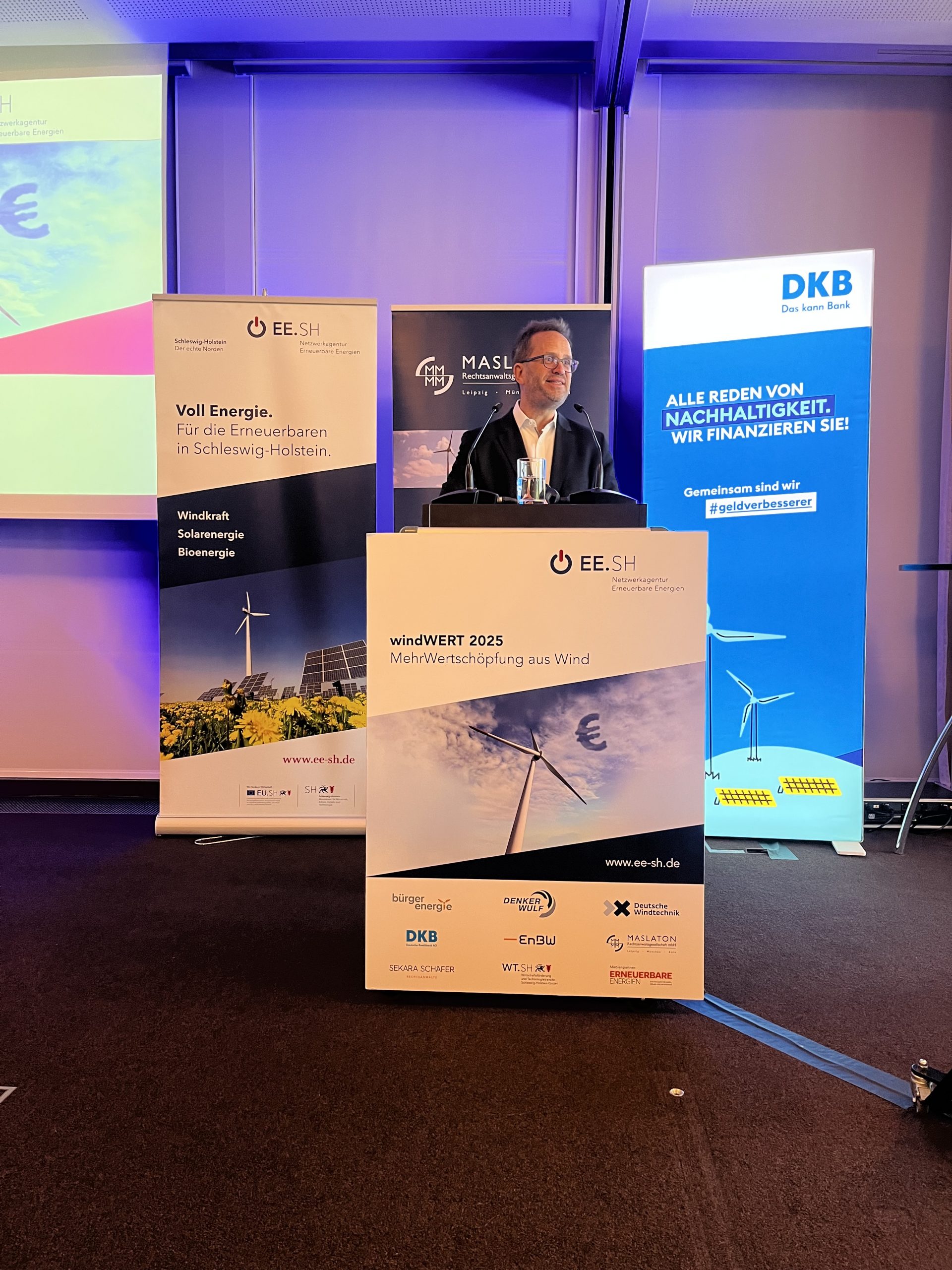
Many thanks to the organizer Katja Rosenburg from EE.SH (Netzwerkagentur Erneuerbare Energien Schleswig-Holstein) & team and for the successful moderation by Dr. Matthias Hüppauff
I am looking forward to my 2nd windWERT cup and to the upcoming 16th windWERT on the last Tuesday in August 2026! #WhenOnshoremeetsOffshore
Thank you very much for your interest in mEErFrauen eV and the opportunity to get to know you.