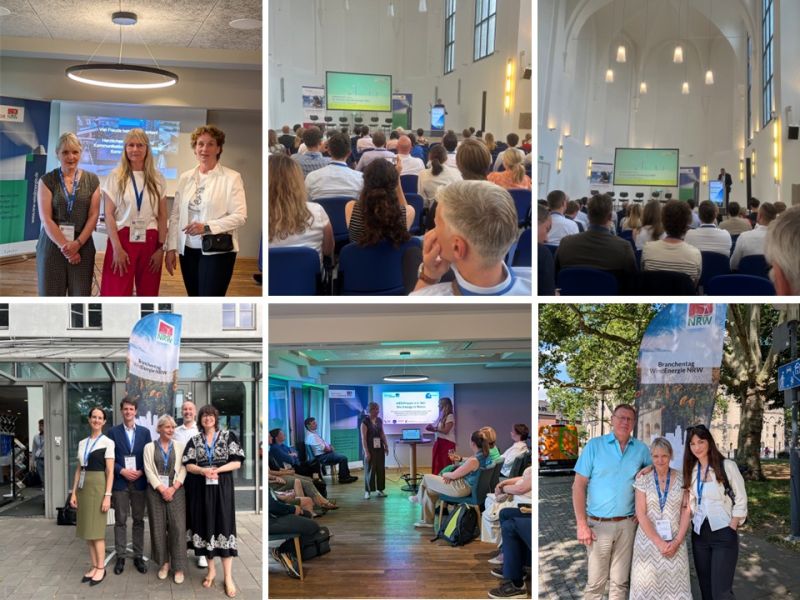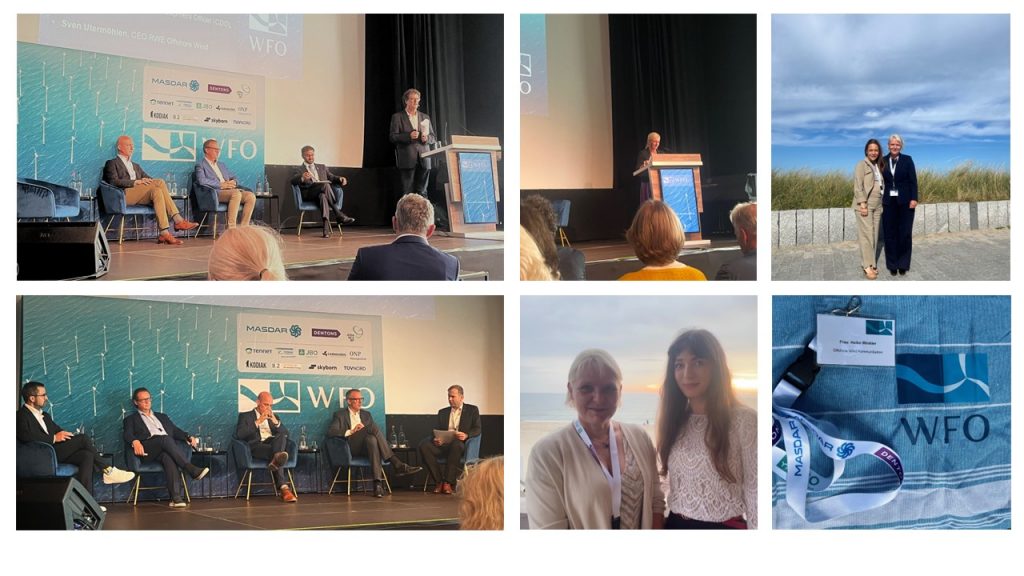
North Rhine-Westphalia is a strong industrial hub with a long tradition that aims to preserve and expand industrial production and value creation through transformation. Energy-intensive industries and the offshore wind industry and energy sector complement each other perfectly. It was exactly the right place to discuss current issues in Germany’s offshore wind industry with experts, while also keeping the broader European context in mind. For the third year in a row, it was a pleasure for me to organize and moderate the offshore wind energy segment of the program on June 30 and July 1, 2026.
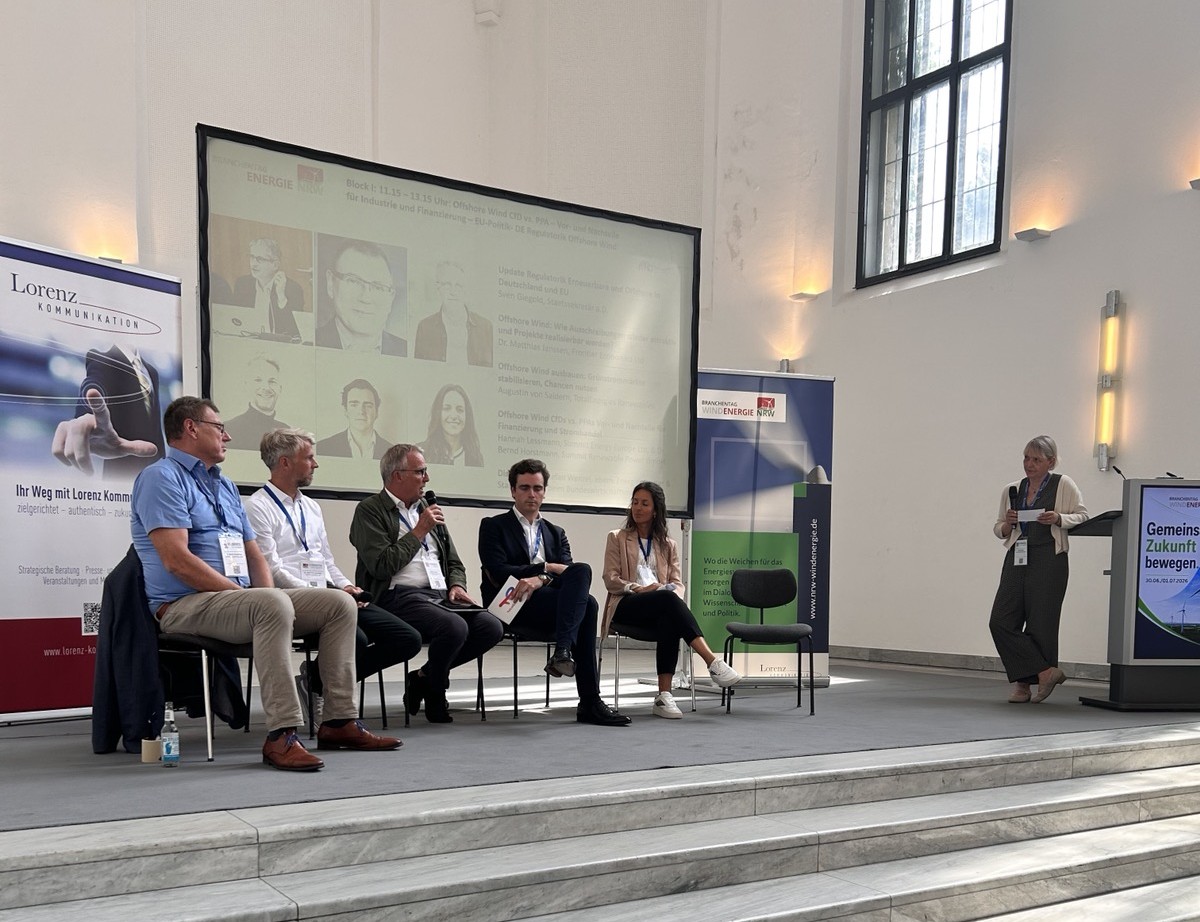
Offshore Wind Block 1 in Neuss last week:
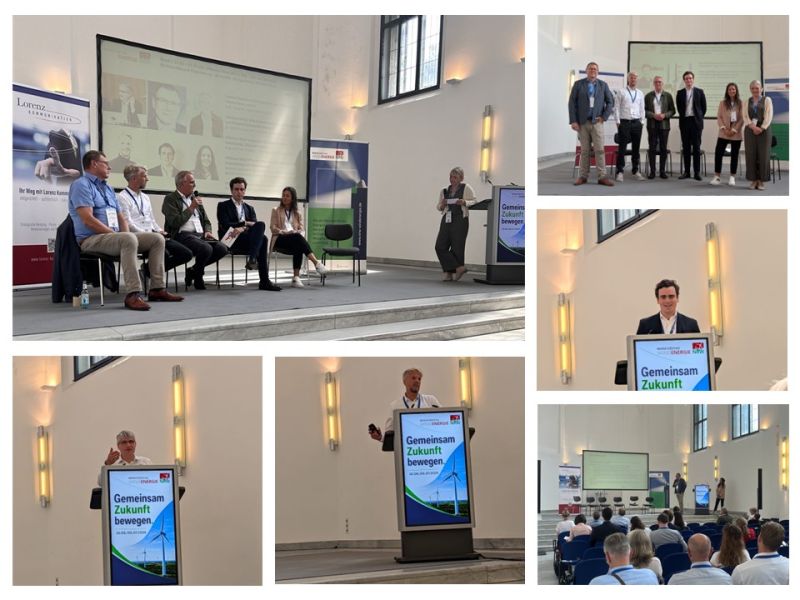
The first keynote address by Sven Giegold, former State Councilor, made it clear that the priority right now must be to give weight to the demands regarding the EEG and WindSeeG, particularly with regard to European energy and industrial policy. Germany must not fall behind by allowing a lack of regulation to jeopardize investment, value creation, and employment.
Dr. Matthias Janssen of Frontier Eoncomics then explained how offshore wind tenders can once again become attractive and projects feasible, based on studies conducted to date. The focus is on the economic viability of new offshore wind projects, including in an international context, with an emphasis on de-risking and area optimization (reduction of power density, international cooperation, phased development, FEP) and, in this context, on indexed CfDs as well as the coexistence of CfDs and PPAs.
Building on this , Augustin von Saldern of TotalEnergies Renewables provided an overview of the company’s planned and acquired offshore wind projects. He emphasized TotalEnergies’ commitment to expanding offshore wind energy in Germany (current development portfolio of 7.5 GW). Discussions with German authorities regarding the return of the license or compensation concern the 1.5 GW NordseeEnergies 2 (NSE2) project, as this license has been negatively impacted by delays and uncertainties. With regard to the new WindSeeG, PPAs are, in his view, the preferred financing method and should not be disadvantaged compared to CfDs. Power purchase agreements (PPAs) are essential for decarbonization. The European Commission therefore promotes them as a key instrument for financing the energy transition and ensuring stable and predictable energy prices for companies in the long term. The goal is also to reduce the risk associated with PPAs.
In a joint presentation , Dr. Bernd Horstmann, Director of Project Development at Summit Renewable Power GmbH, and Hannah Leßmann, Origination Coordinator at Summit Energy Europe—both based in Düsseldorf—discussed the advantages and disadvantages of offshore wind CfDs versus PPAs for industry and financing. Both companies are part of Sumitomo Corporation, which has 128 locations in 66 countries and regions. The focus is on flexibility in structuring indexed CfDs in conjunction with PPAs that include switch options, while appropriately accounting for the EU’s NZIA to optimize land use planning and maximize the operational lifespan of offshore wind farms. The team clearly outlined the advantages and disadvantages of both financing structures and also presented the various solutions for CfDs and PPAs (not all PPAs are the same). So which is better—a CfD or a PPA? That depends entirely on the bidder in the respective auction and many other factors, and therefore remains a case-by-case decision—one that can and must change over the course of a 25-year term or longer.
We revisited this topic during the panel discussion with Stefan Wenzel, former Minister of Energy and State Secretary at the Federal Ministry for Economic Affairs. All panelists introduced themselves, highlighting their respective connections to North Rhine-Westphalia. They explained the added value of offshore wind for North Rhine-Westphalia—and of North Rhine-Westphalia for offshore wind—from their respective perspectives. Stefan Wenzel underscored the significance of EU regulatory developments—such as NZIA, CBAM, the Industrial Accelerator Act, and resilience auctions—for the energy transition in Germany. Dr. Matthias Janssen emphasized the importance of increasing the attractiveness of sites, including through the use of areas outside Germany’s exclusive economic zone (EEZ). Augustin von Saldern pointed out that CfDs should not become an obstacle to PPAs and that CfDs should not create an imbalance in competition with PPAs.
This discussion provided an excellent overview of the current issues being debated within the industry in the context of the draft “Offshore Wind Energy Act,” which has not yet been reviewed. Above all, the growing European dimension of the offshore wind industry in Europe became apparent, as did the equal importance of CfDs and PPAs for the offshore wind sector. It is investment security over a very long period—one that is expected to become even longer in the future—that can be provided to various investors (developers, operators, etc.) in different ways.
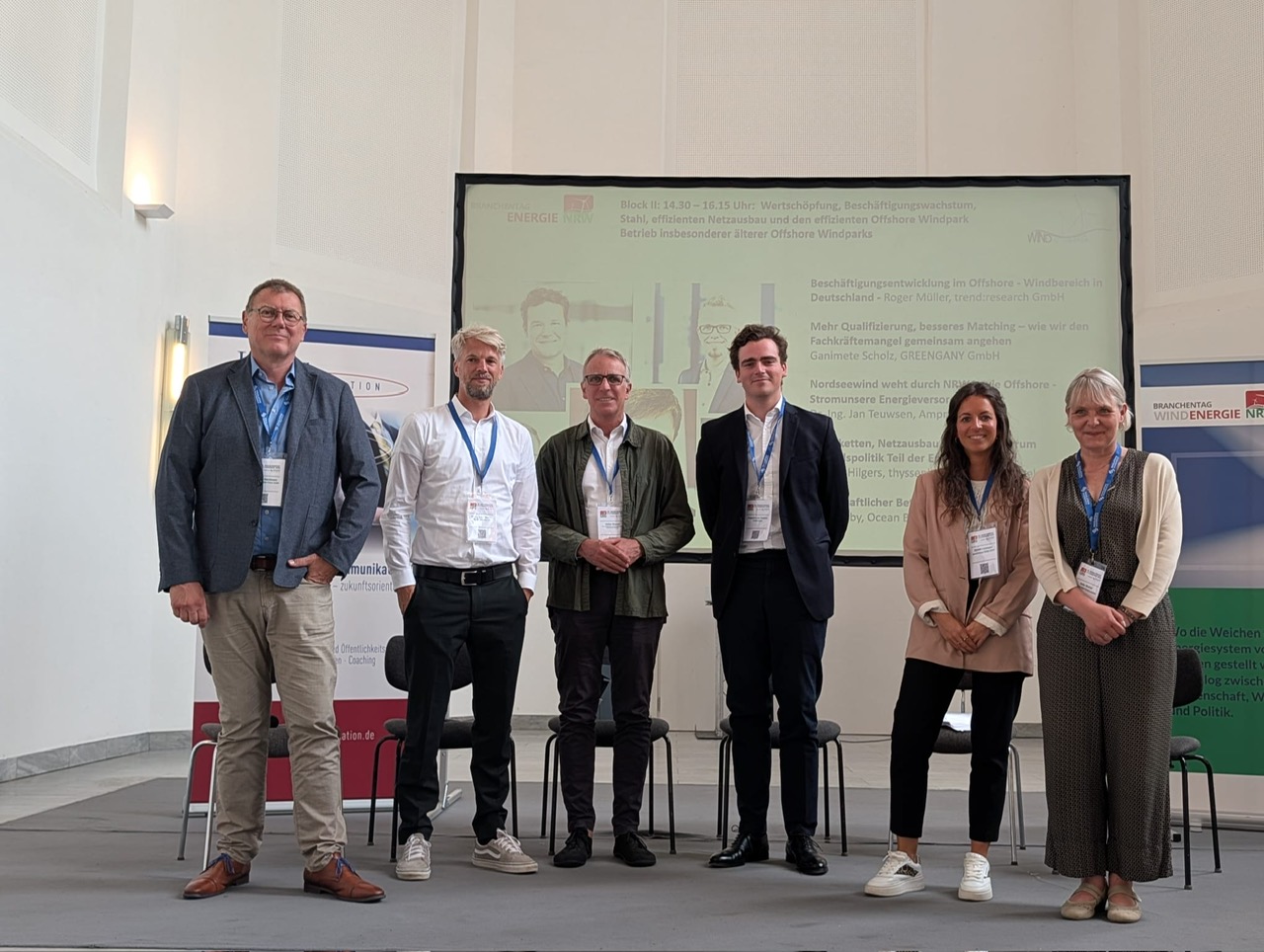
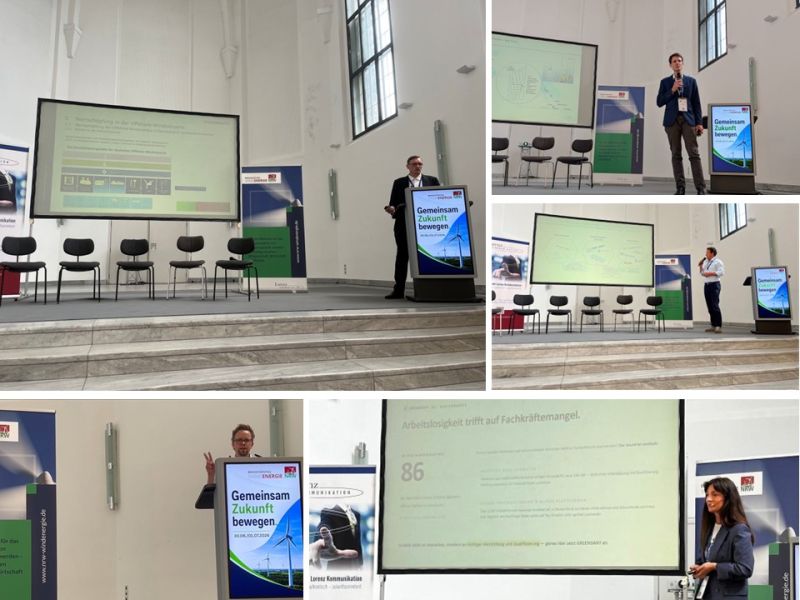
Offshore Wind Block 2 – Value Creation, Employment Growth, Steel, Trade Policy, Efficient Grid Expansion, and Cost-Effective Operation of Older Offshore Wind Farms
Roger Müller of trend:research GmbH kicked off the event with his presentation, “Employment Trends in the Offshore Wind Sector in Germany,” in which he also focused extensively on employment trends in North Rhine-Westphalia. North Rhine-Westphalia will be the federal state with the highest employment in Germany’s offshore wind value chain by 2025. The reasons for this, the factors driving value creation in Germany, and what the import-intensive expansion of offshore wind energy means for employment compared to a high share of domestic value creation were the main topics of his presentation. His company has been analyzing the economic effects of the energy transition for many years. It quickly became clear that future employment growth—including in the areas of green hydrogen, energy storage, and other elements of the transition—depends heavily on regulatory decisions. The European Commission is also focusing on this with the NZIA, the Industrial Accelerator Act, and many other measures. In Germany, the potential for value creation still does not seem to be a high priority, even though significant job losses are already evident due to the transformation and the phase-out of fossil-fuel-based products (fossil-fuel-generated electricity, passenger cars, and much more).
Ganimete Scholz, GREENGANY GmbH, explained to participants at the Zeughaus in her keynote address titled “More Training, Better Matching—How We Can Tackle the Skilled Labor Shortage Together.” Her job platform integrates many advantages of existing services and combines them with AI applications that provide added value for companies in the renewable energy sector. It’s not just about simply “matching” job postings with applicants; it’s also about identifying what’s missing and how it can be addressed to bring employers and employees together (keyword: skills). The audience also engaged with her presentation, and she had the opportunity to explain the importance that transparency now holds in this process. GREENGANY aims to do nothing more and nothing less than revolutionize existing approaches and provide job seekers with the transparency that builds trust and ensures accountability.
Dr.-Ing. Jan Teuwsen of Amprion GmbH gave a presentation titled: “North Sea Wind Blows Through North Rhine-Westphalia—How Offshore Electricity Strengthens Our Energy Supply.” Amprion GmbH in Dortmund is one of the transmission system operators (TSOs) relevant to offshore wind energy that will, in the future, transport large amounts of electricity from the North Sea to North Rhine-Westphalia, where it is needed. He presented the various solutions available to a TSO for transporting electricity as cost-effectively as possible at the national level—and increasingly through international cooperation, for example via interconnectors—provided, of course, that approval is granted by the Federal Network Agency. He highlighted the high demand for electricity and clearly explained the advantages and disadvantages of various grid connection systems.
“Supply Chains, Grid Expansion, Resilience: Why Trade Policy Is Part of the Energy Transition,” was the topic of a presentation by Marcel Hilgers of thyssenkrupp Electrical Steel GmbH, another major employer in North Rhine-Westphalia alongside Amprion and one of the few remaining European manufacturers of niche products that are essential for electricity generation and transmission. It became clear that another cornerstone of Europe’s sovereignty is based in North Rhine-Westphalia and is currently struggling significantly with trade policy challenges. If players like his company disappear from the market, another dependency—in addition to numerous raw material dependencies—will have been tacitly accepted, which in turn jeopardizes the resilience of the grid expansion. Particularly with regard to cybersecurity, as well as in the context of the Net Zero Industry Act and efforts to build greater resilience, the current distortions of competition should not lead to yet another situation of dependency. Non-European countries such as China have long identified the energy transition as an economic driver, and anyone who still relies on fair global trade today will have to import tomorrow and forgo future value-creation potential and jobs.
Jean Huby, CEO of Ocean Breeze Energy, showed participants how to successfully operate older offshore wind farms in a cost-effective manner and what it takes to do so. “People Make the Difference”—or how the OBE team became the architect of its own offshore wind farm—illustrated that an offshore wind farm like Bard Offshore 1 presents different challenges than a newly installed OWF with a manufacturer’s warranty and high feed-in tariffs.
To enable economically efficient operation here, experts with manufacturer-level expertise, digital specialists, and experienced offshore wind managers are needed—managers who possess the necessary know-how, including selecting the right service providers, and who always prioritize the safety of all employees in every O&M optimization effort. “We’ve already saved 4 million metric tons of CO2, and we’re well-equipped for 12+ years of profitable continued operation,” explained the long-time offshore wind farm operator, and the challenges they’ve successfully overcome underscore this statement.
Unfortunately, due to the patron’s upcoming participation and her presentation at the 18th Wind Energy Industry Day in North Rhine-Westphalia, we were unable to follow up with a panel discussion, which—with this lineup—would certainly have been a highlight. However, the excellent presentations stood on their own even without a discussion, and it was an honor for me to moderate this session.
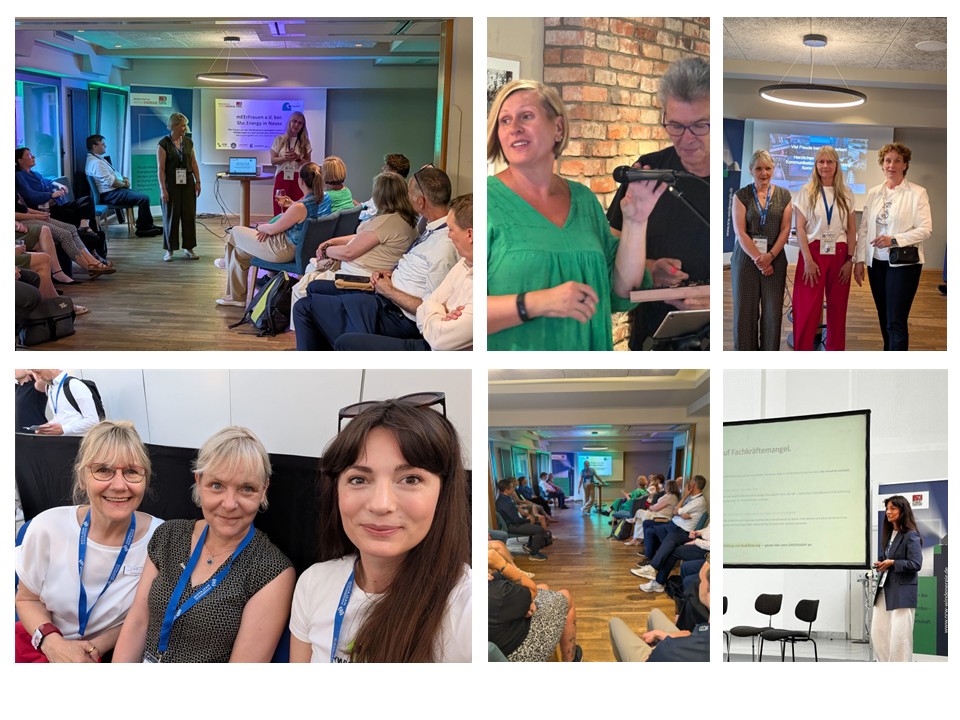
That evening, I had the opportunity to contribute my volunteer work as chairwoman of mEErFrauen e.V., together with fellow board members Katja Rosenburg, Martina Köhn, and Ganimete Scholz, at the networking event for women in the wind energy sector held as part of She.Energy, at the invitation of the organizer, Anne Lorenz. Under the motto “She.Energy – Strong Networks. Open Exchange,” Katja and I had the opportunity to present the added value of our long-standing cross-sector collaboration—in her case, in onshore wind energy, and in my case, in offshore wind energy. That’s what defines us as mEErFrauen: collaborating across the renewable energy sector throughout the five northern German states and complementing one another. Using our own example, we were able to clearly demonstrate why it creates added value to keep an eye on both areas of development and exchange ideas on them. With my 18 years of industry experience, I’ve been happy with our collaboration from the very beginning and have learned a great deal from my even more experienced colleague. We mEErFrauen stand for the stated goal of bringing more women into the renewable energy sector, for equal pay, and for new female leadership models. The support from the participants has shown us once again that we’re on the right track. Martina Köhn from WindAdvice, our secretary, also dazzled the audience that evening with a musical performance, thrilling the participants of the networking event with the Nina Hagen song “Du hast den Farbfilm vergessen.”
A multifaceted, informative, inspiring, and forward-looking first day of the conference in Neuss—held at both the Zeughaus and the Voigthaus amid summery temperatures—made for a successful event that brought onshore and offshore wind a step closer together. And there’s one thing that unites us right now anyway—neither of us has current legislation in place, and this regulatory uncertainty alone brings us together. Many other areas of overlap—steel, grids, storage, hydrogen, resilience tenders, and much more—clearly call for a more active exchange.
In Block 3 on Day 2 at the Zeughaus: Electricity Meets Green Hydrogen, and Together They Meet the Demand
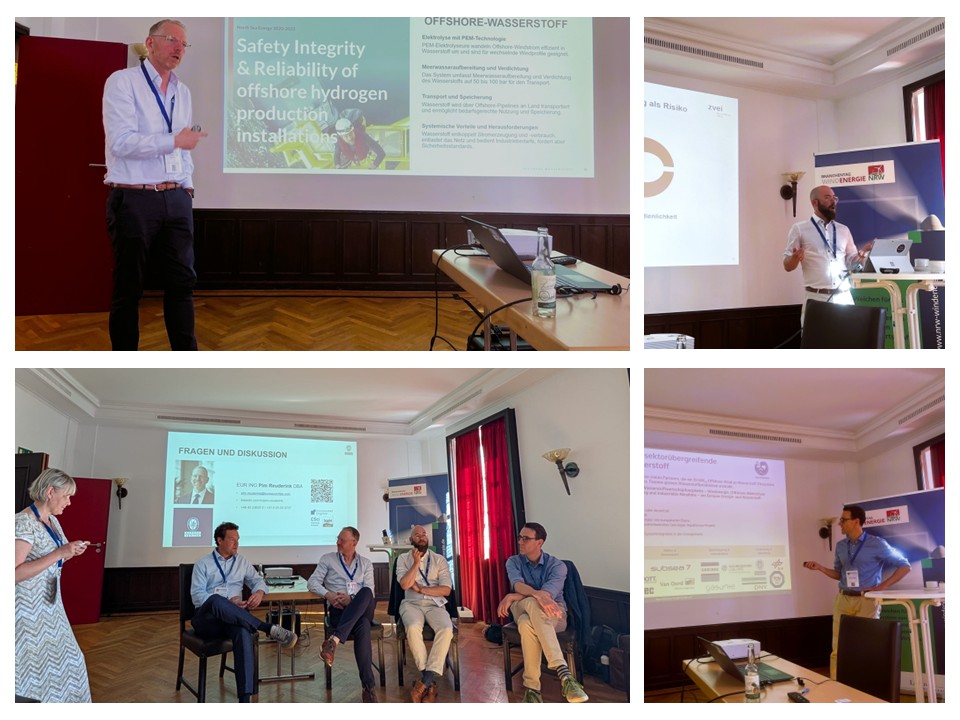
“Setting Sail Toward Greater Energy Resilience with Offshore Hydrogen” by Robert Seehawer of the AquaVentus Support Association provided an excellent introduction and overview of current developments and the opportunities for transformation driven by green hydrogen from offshore wind energy. The regulatory challenges, the situation surrounding the BSH’s consultation on SEN-1, the cost savings, the reduced need for grid expansion, and the urgently needed green hydrogen for the ongoing transformation were all brought to life in Robert Seehawer’s confidently delivered presentation. The question remains as to why green hydrogen is being made to struggle so much to fully assume its role and function in the new sustainable energy system. This was further underscored in the concluding discussion. There is no contradiction with electrification, and many aspects cannot be implemented economically and efficiently without green hydrogen. It is to be hoped that the eagerly awaited WindSeeG will facilitate the development of green hydrogen at sea and help alleviate the burden on pipelines and grid connections in a meaningful way.
Jonas Rex-Quincke of ZVEI e.V., in his keynote address titled “Between Takeoff and Reality: Electrification as the Key to Transformation,” highlighted the importance of rapid electrification for North Rhine-Westphalia as a business location. He focused his presentation on electricity demand and explained to participants the importance of flexibility in the power system. The potential for flexibility is enormous, and the key is to create the right incentives to harness it. Energy storage, e-mobility, and much more can alleviate the strain caused by the slow expansion of the grid, thereby saving immense costs for end customers and industry. This is where electrification plays a key role in accelerating the energy transition, advancing climate protection, and fostering sustainable economic growth.
Pim Reuderink, EUR-Ing, DBA, FIGEM, from Bureau Veritas Nordics (Netherlands), presented the talk: “Offshore Hydrogen: The Solution to Grid Congestion” in German and explained why offshore hydrogen is not just an offshore solution, but a matter of energy supply and competitiveness for North Rhine-Westphalia. His presentation focused on presenting offshore hydrogen as a systemic response to slow grid expansion and grid bottlenecks. Additional flexibility and transmission options are needed to bridge the gap between wind energy expansion and grid completion. Offshore hydrogen decouples energy in terms of both space and time and effectively addresses grid bottlenecks. He exposed the price of electricity as the main cost driver for hydrogen, which is essential for industrial needs. Coordination and cross-sector collaboration are prerequisites for value creation, speed, and acceptance.
Marcel Hilgers of thyssenkrupp Electrical Steel GmbH contributed to the concluding discussion with the speakers and highlighted the role of green hydrogen and advancing electrification in ensuring the competitiveness of steel production in North Rhine-Westphalia, Germany, and Europe. The four experts made it clear that this is a shared transformation that requires both electrification and green hydrogen to prevent deindustrialization and enable reindustrialization. Competitiveness, economic growth, and climate protection in North Rhine-Westphalia, Germany, and Europe clearly depend on goal-oriented regulation, and neither the transformation nor economic growth will fail due to a lack of existing industrial expertise. The moderation and the interactive dialogue with the participants made this panel discussion a memorable experience for me as well—one from which I was able to learn a great deal.
I would like to thank all the speakers who shared their expertise over these two days, thereby clearing up many ambiguities, misconceptions, and supposed challenges. It is to be hoped that this knowledge will also be reflected in regulatory frameworks so that we can advance a transformative reindustrialization in North Rhine-Westphalia, Germany, and Europe. The goal is to shape a value-creating future with offshore wind energy—for greater climate protection, economic growth, more jobs, and increased resilience and independence in the geopolitical context. – Good luck! The discussions and contributions over these two days were truly forward-looking!
Organized by Lorenz Kommunikation under the patronage of Mona Neubaur, Minister of Economic Affairs, Industry, Climate Protection, and Energy, and Deputy Minister-President of the State of North Rhine-Westphalia, Offshore Wind Kommunikation brought together experts to discuss topics related to offshore wind energy for the 18th Wind Energy Industry Day in North Rhine-Westphalia, and together they spent two days highlighting the added value of offshore wind energy.
A big thank you to the Lorenz Kommunikation team: Anne & Klaus Lorenz and Malte Harder! – strongertogether