
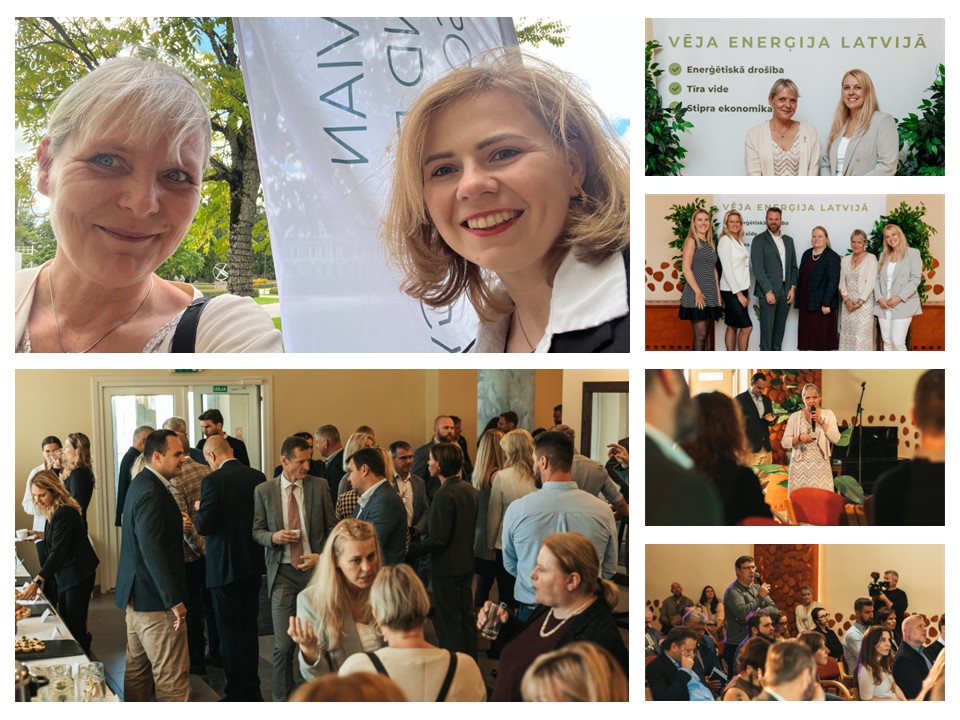
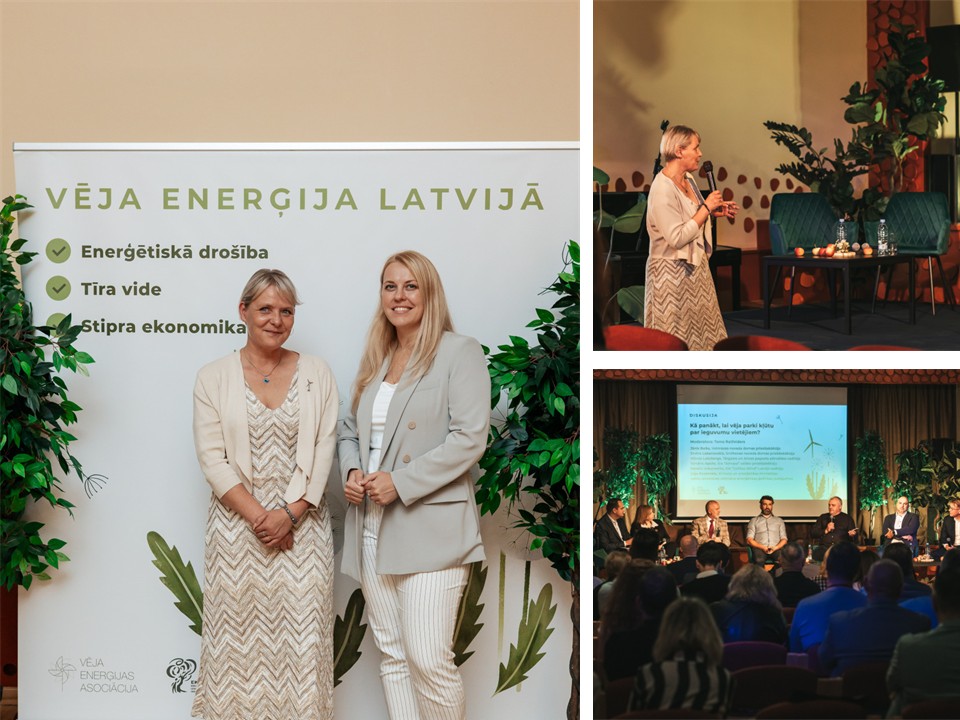
September 11, 2026 – The Latvian Wind Energy Association organized a wind energy conference at the Kocēni Cultural Center (Valmiera Municipality, Kocēni) in Latvia. It was for me the first-time visiting Latvia, Riga and the Valmiera Municipality and I was deeply impressed by the Beauty of the places I was able to see during my business trip.
Thanks to the Latvian Wind Energy Association for organising this conference and for inviting the Schleswig-Holstein Renewable Energy Network Agency (EE.SH) and Wirtschaftsförderungsgesellschaft Nordfriesland mbH, on whose behalf I have had the honour of presenting at this productive conference: “Vai (kā) vējš var kļūt par reģionu attīstības dzinējspēku?”
At this conference, we talked about what wind energy projects mean for municipalities, what the real benefits are—jobs, taxes, development opportunities—and the challenges that raise concerns and discussions among local communities and entrepreneurs..
In my conference slot I talked about: How Wind Farms Affect Tourism or how participation can create acceptance – The German Experience. EE.SH has implemented some excellent practical examples, which I was delighted to outline in the presentation.
The central thesis: Coexistence of wind turbines and tourism is possible – but it depends on planning, participation and local value creation. The conference participants where very interested to learn more about the reason why Coexistence works e.g in Nordfriesland Germany.
Three central aspects:
Value creation: Jobs, taxes, local companies and infrastructure
Participation: Community ownership, consultation, and fair benefit sharing
Integration: Protection of tourism assets, coordinated planning and credible communication
I shared the Lessons Learned of EE.SH and explained the theoretical background of acceptance and reactance, the meaning of transparency and integration in the field of social psychology.
I am grateful to Lasma Livzeniece, Executive Director and Katrina Duka-Gulbe, Deputy Executive Director of Latvian Wind Energy Association, to Heike Jantsch from the German Embassy Riga also for the great conversation at the following day, to Deutsche Gesellschaft für Internationale Zusammenarbeit (GIZ) and to Indra Freiberga from Dutch Embassy and so many more who made this regional exchange possible.
Finally, transformation is all about communication and the anticipation of social perspectives.
Acceptance requires transparency, involvement in the creation of and participation in added value—for example, through jobs—clarification from a source deemed credible, and a broad societal dialogue, especially in cases where there is already existing resistance. These are mechanisms that can be understood from a social-psychological perspective and through the lens of group theory.
Photos by Lauma Kalnina / Latvian Wind Energy Association, and many thanks to Līga Rozentāle, Deputy State Secretary for Energy Policy at the Ministry of Climate and Energy, for our selfie.


